


You can tell when looking at them that some dogs are made for cold weather. Siberian huskies, Malamutes and St. Bernards bark with glee, "Bring on the cold and snow!" Their coats are made with dense, warm hair that keeps them naturally insulated. Other breeds are likely shivering at the mere thought of going outside when the snow starts to swirl.
The cold isn't just uncomfortable for some dogs in winter, it can be dangerous. That's why as temperatures drop, it's important to take safety precautions for your dog.
How Much Time Should My Dog Spend Outside?
Overexposure to the cold is just as dangerous to dogs as it is to humans. Just because they have a winter fur coat does not mean that they are not susceptible to the same cold-weather sickness and injuries that can afflict humans. Spending too much time out in the cold can be hazardous to their health so it is important to limit their time outdoors during sub-zero temperatures. This doesn't mean that your dog shouldn't spend time out in the snow and cold. In fact, watching a dog prance around in the snow can be one of the greatest joys for a dog parent. Throwing snowballs and watching your dog try and fetch them can help them get the exercise needed to keep the winter weight off, but as you start to get cold, they will probably also start to feel the chill.
A wintery outdoors is nothing to shy away from for your dog, but just as you would with children, make sure they come inside after so long to prevent any health issues like those listed below.
How Can I Tell if My Dog is Too Cold?
The most obvious sign a dog is cold is shivering, the body's natural way to generate heat. Other common indications that your dog might be suffering from the cold include an unwillingness to go outside, slow and clumsy movements caused by cold joints and muscles, and less energy than normal.
Some dogs are less tolerant of the cold than others. Body fat, size, age, coat and overall health affect your dog's tolerance of the cold. That's why tiny Chihuahuas and Lean Greyhounds, for example, aren't well-suited for a cold blast.


Tasty Tips
What Do I Do If Hypothermia Sets In?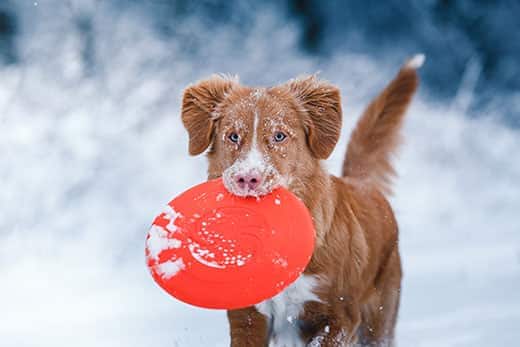
It's important to pay attention to whether your dog is cold. Despite their furry coats, dogs can suffer from life-threatening issues like hypothermia and frostbite if they're left in the cold for too long.
Common symptoms that indicate your dog might have hypothermia are intense shivering, listlessness, and frostbite. Frostbite on dogs most often occurs on exposed areas, such as the tail, tips of the ears, scrotum, and foot pads. You can tell if your dog has frostbite because the affected skin becomes very pale with a bluish/white hue that is due to a lack of blood flow, explains PetMD.
- Bring them inside.
- Wrap in blankets warmed in a dryer or on a radiator.
- Call your veterinarian, they will check to ensure there aren't any lasting effects or other problems like frostbite.
How Can I Keep My Dog Warm Outside?
If you have a dog with shorter hair, whether it's naturally short or styled that way, a sweater or jacket might give some comfort in the cold, just like a coat does for you. Perhaps consider no-slip booties for your dog, ice and snow can easily accumulate in your dog's pads, which may result in frostbite. When they come inside, make sure to dry any accumulated snow from their body as it can sometimes mat within the fur. This will help warm them up more easily.
Dogs in winter don't have to be miserable. Keeping your dog comfortable in cold weather will make them excited to play with you in the winter wonderland. Now go fetch some snowballs!

Related articles

What Is The Best Dog Food For Small Breeds?
Find the best nutrition for small breed dogs and what makes the perfect food choice for their health. Explore more guidance for small dogs at Hill's Pet UK.
Develop Your Gut Instinct for Pets’ Digestive Disorders
Gurgling tummies in turmoil are not good news for pets. Owners who have to clean up the unfortunate consequences, digestive problems are one of the rare downsides to owning a pet.
The Benefits of Wet Dog Food
Explore the benefits of wet dog food and how it can improve your pet's wellbeing and happiness. For more nutritional insights, visit Hill's Pet UK.
What to Feed Your Pregnant or Nursing Dog
Learn what you can feed your pregnant or nursing dog to keep her and her new pups healthy.
Put your dog on a diet without them knowing
Our low calorie formula helps you control your dog's weight. It's packed with high-quality protein for building lean muscles, and made with purposeful ingredients for a flavourful, nutritious meal. Clinically proven antioxidants, Vitamin C+E, help promote a healthy immune system.
Put your dog on a diet without them knowing
Our low calorie formula helps you control your dog's weight. It's packed with high-quality protein for building lean muscles, and made with purposeful ingredients for a flavourful, nutritious meal. Clinically proven antioxidants, Vitamin C+E, help promote a healthy immune system.