


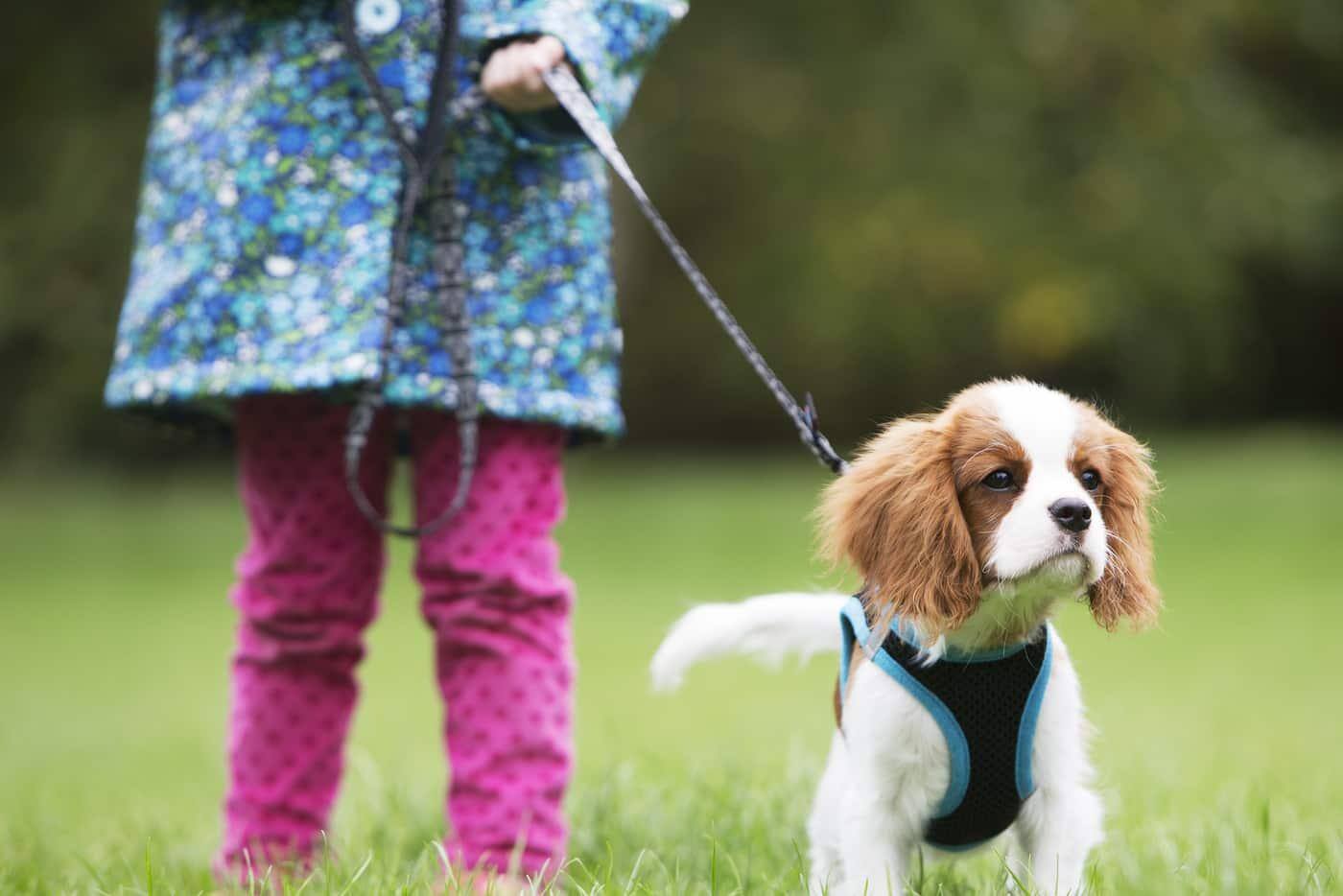
Your child wants a puppy. In fact, desperate for one. For every holiday, birthday and good report card, you get a new request for a dog. Your child is relentless, but you're unsure. Pets are a wonderful addition to the family, but they are also a lot of work, and you may have a lot of questions. What's the best age to get a dog for a child? How do I know if my kid is ready for a pet, and if not, how do I explain this to them?
These questions are important to ask yourself. Just as you wouldn't make a significant life decision without weighing all the considerations, you shouldn't adopt a dog without determining if this is the best idea for your family.
Buy Yourself Some Time to Think
If your child usually puts in the request for a new puppy during special life moments, like birthdays and holidays, remind them that pets are not presents. Adopting an animal is a significant lifestyle change, and a pet cannot be treated like a stuffed animal or toy. Talk to your child about the many responsibilities of owning an animal, and be clear that life moments are not appropriate times to gift a pet.
This discussion will give you time to think about whether your child is ready to help take care of a pet, and will encourage your child to take time to think about it, as well. Ask your child to come up with a list of three reasons why they want a pet and three ways they can help take care of a puppy.


Tasty Tips
What's the Best Age to Get a Dog for a Child?
There is no perfect age to adopt an animal. Every child reacts differently to pet ownership. Every dog transitions uniquely to being adopted, and every family situation is different. Some children are born into families with pets, and others don't have an animal living in their home until they are teenagers.
Knowing your child's personality and behaviour will help you identify what to do when your child wants a puppy. First, consider their age. Toddlers will not be able to help take care of a pet, though, they may enjoy the interaction with a new furry friend. Teenagers can be excellent help, but if they spend a lot of time out of the home for their own activities, they may not have time to take care of a dog. School-aged children are often ones to beg for an animal, and there are many ways they can get involved in the dog's care, so long as they are aware that a pet is not a toy, and mustn't be treated as one.
Young children may be able to help out by feeding the dog daily, while teenagers may be well-suited to help the puppy expend energy on a walk or playing in the garden. Children of all ages can help facilitate potty training by coming with you to take your puppy outside.
A good test to see if your child is ready for a new dog is to give a little test. In addition to having them write down the reasons for getting one and how they can help, give your child a few similar chores to follow for a couple of weeks to see how well they take to the responsibilities. This can include watering plants around the home (like giving the dog water) or picking up their own toys (picking up poop after the dog or the dog’s toys). If your child responds well to these new tasks, it might be a sign that they are willing to take on the chores associated with caring for a dog.
Lastly, it is important to consider adopting an older dog, and not just looking for a puppy. While little kids will absolutely fall in love with puppies, they will also get super excited about any new dog in the home. Just like your kid is growing and learning about the world around them, puppies are going through a similar stage of life and require additional care that you'll need to be prepared to deal with as the parent of BOTH the kids (human and puppy) in your house.
Telling Your Child You Can't Adopt a Pet
Even if you love animals, you might determine that your child isn't quite ready for pet ownership. There are many reasons why the timing isn't right, so be honest with your child about what influenced your decision. For example, if your teenager cannot keep their room clean, they might not participate in the daily chores of dog ownership. Explain this, and then give your teen the opportunity to work toward improving responsible behaviours. If your child shows an honest effort, you may change your mind.
Lifestyle circumstances may also play a role in why it's not time to get a pet. If you don't have enough space in your home for a dog to live comfortably, or your family spends too much time out of the house for work, school, and other activities, it may simply just be the wrong time to adopt. Being honest with your child allows them to understand your reasoning instead of assuming that you don't want an animal.
Choosing to adopt is a big choice, so be honest with your child about your reasons why the family is ready or not ready to welcome a new furry friend.

Related articles
What to Feed Your Pregnant or Nursing Dog
Learn what you can feed your pregnant or nursing dog to keep her and her new pups healthy.

Develop Your Gut Instinct for Pets’ Digestive Disorders
Gurgling tummies in turmoil are not good news for pets. Owners who have to clean up the unfortunate consequences, digestive problems are one of the rare downsides to owning a pet.

What Is The Best Dog Food For Small Breeds?
Find the best nutrition for small breed dogs and what makes the perfect food choice for their health. Explore more guidance for small dogs at Hill's Pet UK.
The Benefits of Wet Dog Food
Explore the benefits of wet dog food and how it can improve your pet's wellbeing and happiness. For more nutritional insights, visit Hill's Pet UK.

Put your dog on a diet without them knowing
Our low calorie formula helps you control your dog's weight. It's packed with high-quality protein for building lean muscles, and made with purposeful ingredients for a flavourful, nutritious meal. Clinically proven antioxidants, Vitamin C+E, help promote a healthy immune system.
Put your dog on a diet without them knowing
Our low calorie formula helps you control your dog's weight. It's packed with high-quality protein for building lean muscles, and made with purposeful ingredients for a flavourful, nutritious meal. Clinically proven antioxidants, Vitamin C+E, help promote a healthy immune system.