

Giving your dog a pill can sometimes be a challenge. But as a dog parent, learning how to get a dog to take a pill is an important skill to master, and fortunately, a rather simple one in most cases. So what can pet parents do to make this process go more smoothly? Read on to learn some veterinarian-approved tricks of the trade.
How To Give a Dog a Pill: The Meatball Method
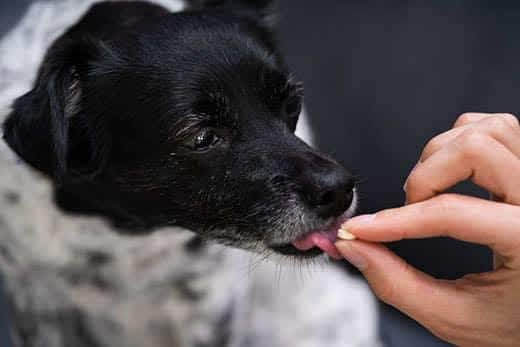
When it comes to taking medication in pill form, most dogs resist simply because they don't enjoy the taste of the pill. With this in mind, you can adapt the “spoonful of sugar” medicine trick to suit your canine friend.
If your vet gives the go-ahead for the medication to be given with food, you can hide the capsule or tablet in the middle of a homemade treat. Use canned food, cooked lean meat, cheese, peanut butter or any other moldable food your dog loves, and form a meatball, cheese ball or peanut-buttery treat around the pill. Your vet or local pet store may also offer specially formulated dog treats that are designed specifically for hiding pills.
Canned dog food or cooked lean meat are ideal for giving your dog a pill, as treats like peanut butter balls may make it harder for your dog to maintain a healthy weight. However, please realise that it is not recommended to use raw meat as this carries the risk of health problems such as salmonella.
Many dogs will happily accept the first meatball with gratitude, making this the simplest way to give an oral pill to most dogs. For those more sceptical dogs, though, you may have to give a plain, pill-free meatball to earn their trust and then sneak in the pill later.


Tasty Tips
When Food Isn't an Option
If you can’t sneak a pill past your super-sniffer dog, or the pill can’t be taken with food, giving your dog a pill may require you to take matters into your own hands — literally. Use these steps for guidance:
Start by using a treat instead of a pill for the first few attempts. For particularly anxious dogs, repeatedly training with a treat and offering lots of praise will help desensitise them to the pill experience.
Stand next to your dog, ensuring that you're both facing the same direction. Then place the treat in your dominant hand.
While placing your non-dominant hand on your dog's upper jaw, with your thumb on one side and your fingers on the other, use your dominant hand to pull down the lower jaw. You'll also have the treat in this hand. Keep in mind that a dog's mouth opens by the lower jaw dropping down, so avoid prying your dog's mouth open by pulling upwards.
Offer the treat by placing it toward the base of the tongue. You'll have to temporarily remove your hand from the lower jaw to pop the treat in toward the back of the tongue, so try to be quick. This does require your hand to be in your dog's mouth momentarily, so there's an inherent risk of your dog biting you during this manoeuvre – be very cautious! The goal of giving them a treat this way is to help your dog relax, as they'll learn this isn't a terrible experience and a little cooperation will be to their benefit. Depending on how much of a challenge these first steps were, you're free to repeat with treats — or even regular dog food — as a way of training your dog to take a pill without a fight.
When you and your pup have mastered the "open jaw and get a treat" manoeuvre, it's time for the main act: substituting the pill in the treat's place. If possible, place the pill toward the back of the tongue, ideally at the base.
Always give lots of verbal praise and a treat after your dog successfully takes the medication.
Because this technique requires a little bit more skill, it may be worthwhile to ask your veterinarian to do a demonstration before attempting this on your own. Once you've successfully placed the pill in your dog's mouth, do your best to keep their mouth closed by quickly placing your dominant hand back on the lower jaw to gain gentle control. Blowing onto your dog's nose and stroking their throat softly will encourage swallowing. Most dogs will lick their nose after they've swallowed a pill. For those more discreet dogs who keep you wondering, just keep an eye on them for a moment afterward to see if they spit out any evidence.
Other Forms of Medicine
If you're still not able to get your dog to take their pill, other forms of the medication may be necessary. For example, your vet may prescribe liquid medications. Liquids can be given via a syringe (or dropper provided with the medication) into the rear of your dog's mouth by inserting the tip of the syringe near the back teeth on either side. The cheek pouch is another good spot to aim for with liquid medications. The Merck Veterinary Manual explains that holding your dog's head pointing partially upward can help prevent spills — a particularly important tip when learning how to get a dog to take a pill.
If you are struggling to administer medications, it's important to keep an open and honest line of communication with your veterinarian so they can help tailor your dog’s treatment plan in a way that keeps you both relaxed and safe. Even if they can't prescribe a different formulation of a medication, they may have their own tips and tricks they can share with you.
If you've struggled with giving your dog medication in the past, be sure to use these steps to ensure you understand how to give a dog a pill.

Related articles

What Is The Best Dog Food For Small Breeds?
Find the best nutrition for small breed dogs and what makes the perfect food choice for their health. Explore more guidance for small dogs at Hill's Pet UK.
What to Feed Your Pregnant or Nursing Dog
Learn what you can feed your pregnant or nursing dog to keep her and her new pups healthy.
The Benefits of Wet Dog Food
Explore the benefits of wet dog food and how it can improve your pet's wellbeing and happiness. For more nutritional insights, visit Hill's Pet UK.
Develop Your Gut Instinct for Pets’ Digestive Disorders
Gurgling tummies in turmoil are not good news for pets. Owners who have to clean up the unfortunate consequences, digestive problems are one of the rare downsides to owning a pet.
Put your dog on a diet without them knowing
Our low calorie formula helps you control your dog's weight. It's packed with high-quality protein for building lean muscles, and made with purposeful ingredients for a flavourful, nutritious meal. Clinically proven antioxidants, Vitamin C+E, help promote a healthy immune system.
Put your dog on a diet without them knowing
Our low calorie formula helps you control your dog's weight. It's packed with high-quality protein for building lean muscles, and made with purposeful ingredients for a flavourful, nutritious meal. Clinically proven antioxidants, Vitamin C+E, help promote a healthy immune system.