


Every cat parent knows that their feline friend enjoys a good stalking and pounce every now and then. Many indoor cat owners often ask, "Why do cats pounce if they don't actually need to hunt for food?" The pounce is actually part of a full sequence of activities that cats have a natural instinct to perform. Understanding each part of this predatory dance sequence can help cat owners have more meaningful playtime with their kitties.
Serious Stalkers
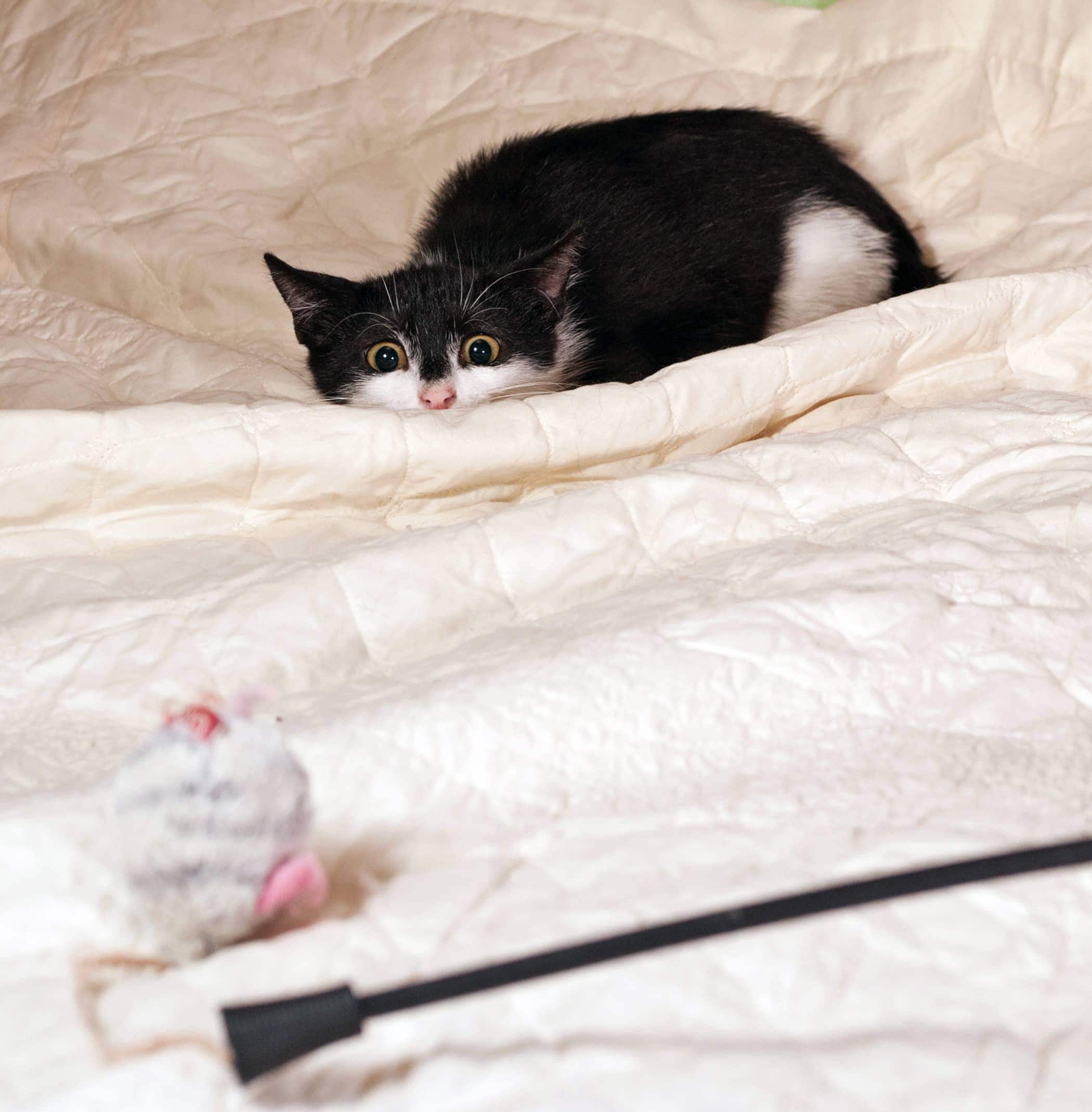
Cats have a natural instinct to hunt and catch prey. The University of California, Santa Cruz reports that research on mountain lions shows that these large wild cats do not have much endurance and instead store up energy and exert just the right amount depending on the size of their prey. Domesticated cats are very similar. They will sit and stare or slowly move to a better position to stalk their prey. Cats usually aren't looking to chase prey for long periods of time. Instead, they want to position themselves in a good spot and exert energy on a solid pounce.
Even when cats know the prey is not real or alive, they still go through the predatory dance sequence, and they love every part of it. That is why cats will enjoy a fake mouse toy set in a spot rather than a throw-and-chase game like you might have a with a dog and his ball. The mouse toy can sit still and your cat will begin with the stalk and then prepare for the pounce. Each movement is crucial for a successful capture.


Tasty Tips
Preparing for the Pounce
Kittens can master the pounce as early as nine weeks old. Even older cats still enjoy a stalk and pounce every once in a while. Whether the cat is young or old, the predatory dance sequence is pretty consistent and cats rarely pounce without first settling into a spot and preparing their back legs. After stalking and finding prey, a cat may focus their stare and start wiggling their butt before the big leap occurs. Although this butt wiggle can seem really funny, it is actually a crucial step. Wiggling and adjusting their back end helps ground them to get a good leap. Cats will size up their target and adjust the force needed to have a solid pounce and take down the prey. Larger prey may require more wiggling or longer shaking in order to get the energy and balance needed to land the leap and pounce on the prey.
Post-Pounce Behaviors
Why do cats pounce and then seem to play with their prey and bat it around for a while? Although it may seem like your cat is just playing around with the toy, cats have an instinct to kill the prey with a bite to the neck. Since cats use a lot of energy on the pounce, they need to make the kill as quickly and with the least amount of effort as possible. This means they need their prey to be in the right position. That's why you'll see your kitty bat or toss their prey around prior to biting it.
Since cat pouncing is a natural instinct, finding toys and playing games that encourage pouncing helps your cat hone their technique. So the next time you and your cat play together, be sure to watch for the different steps and be amazed at the process they go through to catch their prey. Not to mention that this is great exercise for your indoor cat, as well as a bonding experience for you both.

Related articles
Hill's Cat Foods: Nutritional Balance Just for Indoor Cats
Find the right Hill
How Often Should You Feed A Cat?
Feeding time can be a wonderful bonding opportunity for you and your cat. Find out how to make the most of it and create a healthy habit with HIll's Pet UK.
Cats Need Good Nutrition In Order To Stay Healthy
Good nutrition is about the right balance of nutrients. Learn more about health issues when feeding a cat food that has an improper nutritional balance from your friends at Hills Pet Nutrition.
How To Feed a Cat With a Sensitive Stomach
Discover what you can do to spot and support a sensitive cat stomach. See what routines and food you can implement to help your cat be happy and healthy.
Put your cat on a diet without them knowing
Our low calorie formula helps you control your cat's weight. It's packed with high-quality protein for building lean muscles, and made with purposeful ingredients for a flavourful, nutritious meal. Clinically proven antioxidants, Vitamin C+E, help promote a healthy immune system.
Put your cat on a diet without them knowing
Our low calorie formula helps you control your cat's weight. It's packed with high-quality protein for building lean muscles, and made with purposeful ingredients for a flavourful, nutritious meal. Clinically proven antioxidants, Vitamin C+E, help promote a healthy immune system.